





THE TARTEEBHOME GUIDES
Start with how people will gather, talk and move through the room. A Majlis-inspired arrangement can guide a contemporary home without reducing a living cultural tradition to a furniture label.
By TarteebHome editorial desk · Reviewed 20 October 2026
Recognise the cultural reference
UNESCO describes Majlis as a social setting for receiving guests, conversation and the sharing of community knowledge. The joint inscription for the United Arab Emirates, Saudi Arabia, Oman and Qatar was made in 2015. Its account includes seating around the room, but the heritage is the gathering and its social practices, rather than a single commercial sofa style. Read the UNESCO description.
Our planning suggestions below are a contemporary editorial interpretation. They do not claim to prescribe authentic practice for every household or Gulf community. Ask the people who will use the room which customs, seating arrangements and forms of hospitality matter to them.
Draw the conversation before the furniture
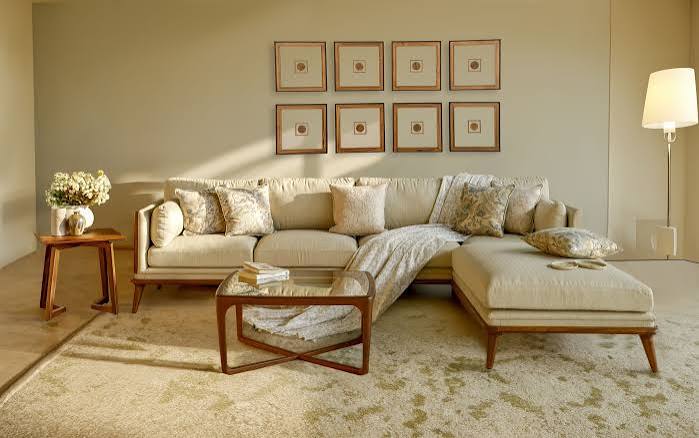
Sketch the doors, windows and fixed features, then mark where people naturally enter and sit. Try a face-to-face, L-shaped or open U-shaped arrangement on paper. Keep a usable route to the seats and avoid making every visitor step around a large central table. An open side can help a compact room feel less enclosed.
Count everyday users separately from occasional guests. A room designed around its largest annual gathering may be inconvenient for normal family use. Loose chairs or smaller tables may offer flexibility, provided the actual pieces can be moved and stored appropriately. Test the intended footprint with paper or removable floor markers before requesting a quotation.
Choose seating around actual users
Floor-level cushions, raised benches and conventional sofas create different experiences. Discuss who will use them and, where possible, try a physical sample for getting in and out, sitting depth and back support. Do not assume one seat height or cushion firmness works for everyone. A style image cannot prove comfort or accessibility.
Record the required outer dimensions and the usable seat dimensions separately. Thick arms and deep backs can take up substantial room without adding sitting space. Ask whether loose cushions, removable covers or modular connections are part of the proposed specification; these details need confirmation from the seller.
Balance pattern, colour and practical care
As an editorial starting point, choose one dominant pattern or colour family and let larger surfaces support it. A patterned textile, a rug or a repeated cushion detail can provide visual rhythm without covering every surface in ornament. Judge actual samples in the room’s daylight and evening lighting.
Ask for the textile composition, care instructions and any documented performance claims. A velvet appearance does not establish fibre content, and a traditional-looking motif does not establish where a fabric was woven. Keep cultural inspiration separate from a material or country-of-origin statement. Product photographs and AI illustrations cannot resolve those facts.
Plan serving surfaces and the delivery route
Consider where guests can put a cup and how a serving tray will pass between people. Compare a central table with several smaller surfaces and keep routes clear. If children or people with different mobility needs use the room, discuss the layout and table choices with them rather than relying on a decorative photograph.
Long perimeter seating can be difficult to bring through stairs or a narrow entrance. Ask for the exact number of modules, packaged sizes and assembly method. A modular appearance does not prove the piece separates for delivery. Check the route using the measurement guide, and confirm destination, access and service scope before relying on a delivery price.
Turn the idea into a respectful brief
Describe the room as a conversation-focused or Majlis-inspired project, then list the arrangement, approximate capacity, dimensions, textile direction and practical priorities. Attach only references you are entitled to share and explain the features you want interpreted. Ask for an original proposal rather than an unlicensed replica.
Review actual samples, construction, seller capability and the written quotation before approving a purchase. TarteebHome’s inspiration library does not certify Gulf manufacture or heritage workmanship. An initial enquiry is a request for review, with availability and commercial terms confirmed separately.
Sources and editorial scope
Cultural context: UNESCO, Majlis, a cultural and social space. No UNESCO images or text passages are reproduced. Room-layout and buying suggestions are original TarteebHome editorial guidance, separate from the heritage description.
These are planning questions and editorial suggestions. The selected seller’s written specification, actual offer and applicable marketplace policies govern the purchase. A style reference does not verify materials, origin or availability.