






THE TARTEEBHOME GUIDES
Use a style reference to describe what you see: proportion, line, pattern, colour and detail. Keep those choices separate from claims about where a piece was made or how it was constructed.
By TarteebHome editorial desk · Reviewed 20 October 2026
There is more than one reference
“Turkish-inspired” can mean several things in a furniture brief. One person may mean a restrained contemporary room; another may be thinking of historical floral textiles or decorative Ottoman references. Ask which visual qualities matter before choosing a whole set. A few precise observations are more useful than a broad national label.
The Metropolitan Museum of Art describes changes in Ottoman decoration over time, including floral developments associated with the Tulip Period and later Baroque influences. Its account is historical context, not a checklist for all Turkish furniture today. Read the Met’s historical overview.
Translate an image into useful design language
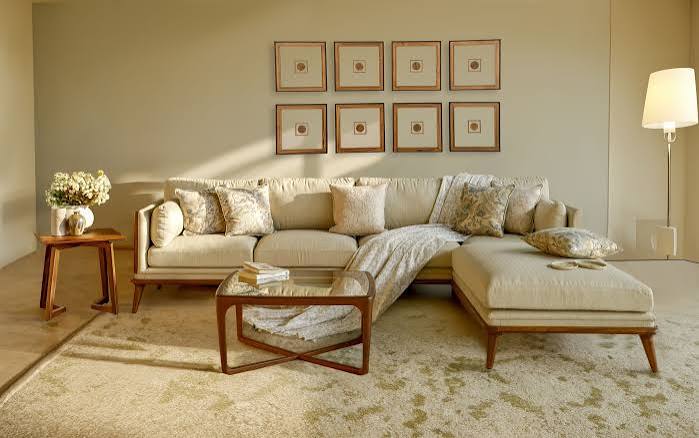
Look first at the silhouette. Are the arms rounded or straight? Does the back look low, upright or enclosing? Are the legs exposed? Then consider the balance between plain surfaces and decorative detail. This makes it easier to explain the intended character without asking a seller to copy a particular branded design.
Separate the visual idea into priorities: perhaps a curved outline, a repeating floral textile and a restrained metallic accent. Decide which one should lead. As an editorial suggestion, testing one decorative element against quieter surrounding pieces can make comparison easier than changing every element at once. Your room and preferences should determine the final balance.
Treat textile pattern as a reference, not a certificate
The Met’s essay on Ottoman silks documents historical textile patterns and weaving traditions. It helps explain why patterned textiles can be a meaningful reference, but a present-day cushion with a similar motif is not thereby an antique, silk fabric or Turkish-made object. Explore the textile history.
For an actual purchase, ask for the fibre composition, upholstery reference, backing and care instructions of the proposed fabric. Review a physical sample when possible. Request evidence for any claimed performance or provenance. A digital image can help communicate a pattern scale; it cannot establish texture, durability or authenticity.
Make scale work in the room
Decorative arms, large cushions and deep frames can change the relationship between outer dimensions and usable seating. Compare the exact width, depth and height with your room plan. For tables and storage, account for doors, drawers, chairs and walking routes. A well-composed photograph may hide how much surrounding space a piece needs.
Use the measurement and access guide before committing to a large configuration. Check the building entrance, stairs and packaged dimensions as well as the final room. A curved or carved-looking frame in a rendering does not prove that the actual piece can be dismantled or carried through a tight turn.
Separate finish appearance from construction
A warm brown surface could be achieved in different ways. A gold-coloured detail does not identify its metal or coating, and a carved appearance does not prove hand-carving. Ask for the actual substrate, finish system, joinery description and proposed hardware where these matter to your decision. Avoid replacing missing facts with a luxury adjective.
If origin is part of the offer, request the seller’s specific supporting information. “Inspired by” describes a design direction; “made in” is a different factual claim. TarteebHome does not classify a design image as imported Turkish furniture or verified artisan workmanship merely because it carries a style tag.
Build a brief that a seller can answer
Choose a small set of references you have permission to share and annotate what you like. State the room, maximum dimensions, intended use, colour direction, practical care needs and delivery city. Mark unknowns for clarification rather than specifying a fabric or finish you have not reviewed.
Ask for an original interpretation, then compare the proposed construction, samples, quantities, PKR total, exclusions and lead-time assumptions. A quotation should describe a real seller’s proposed work. An AI concept can begin the conversation, but it does not establish a manufacturable specification, available stock or a confirmed commercial offer.
Sources and editorial scope
Historical references: Marika Sardar, The Art of the Ottomans after 1600 (2003), and Nazanin Hedayat Munroe, Silks from Ottoman Turkey (2012), The Metropolitan Museum of Art. No museum imagery or text passages are reproduced. Contemporary room suggestions are original editorial judgments, not historical attribution.
These are planning questions and editorial suggestions. The selected seller’s written specification, actual offer and applicable marketplace policies govern the purchase. A style reference does not verify materials, origin or availability.