





TarteebHome buying guides · Reviewed 26 October 2026
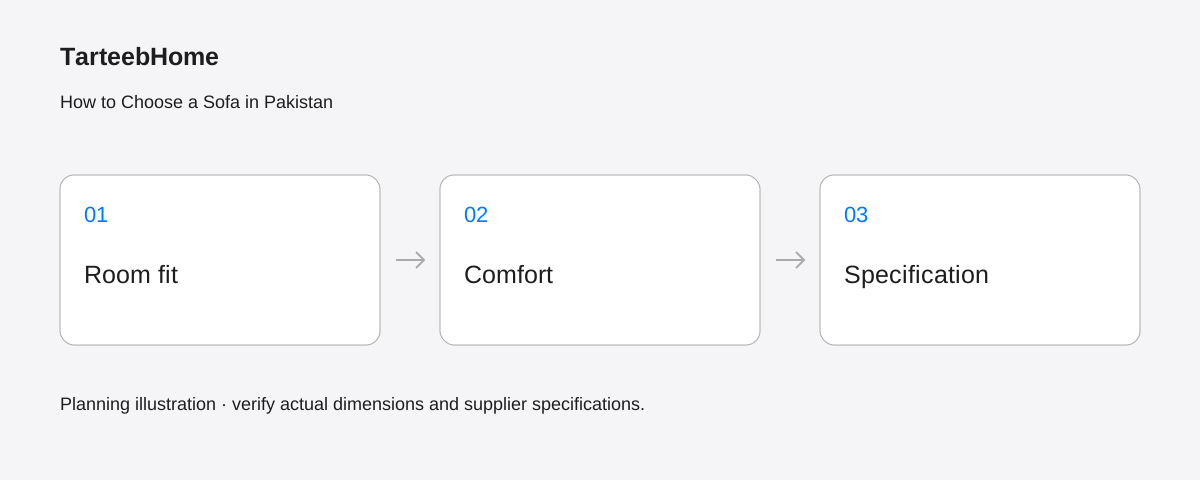
Start with the household, then the silhouette
Write down who uses the sofa, what they do there and what would make the purchase a mistake. A family television room, a formal drawing room and a compact rented apartment can need different seating even when the photographs look similar. Decide whether people usually sit upright, curl up or entertain several visitors. Identify the person who finds the present seat too deep or too low. Take that problem to the showroom or maker rather than ordering a style name alone.
Make a short brief: everyday users, room plan, preferred seating feel, cleaning constraints, access route and the maximum total commitment you can afford. Keep delivery, assembly and any fabric upgrade separate in that budget. A displayed catalogue amount or a design estimate is not a confirmed seller quotation. Ask for the actual offer and its exclusions before paying.
Measure three different things
Record the intended footprint, the useful sitting space and the delivery route. Overall width includes the arms; it does not tell you how much seating is available. Ask for overall depth and height, seat depth, seat height and arm height using the seller’s measurement method. Record whether removable legs or cushions change the transport envelope.
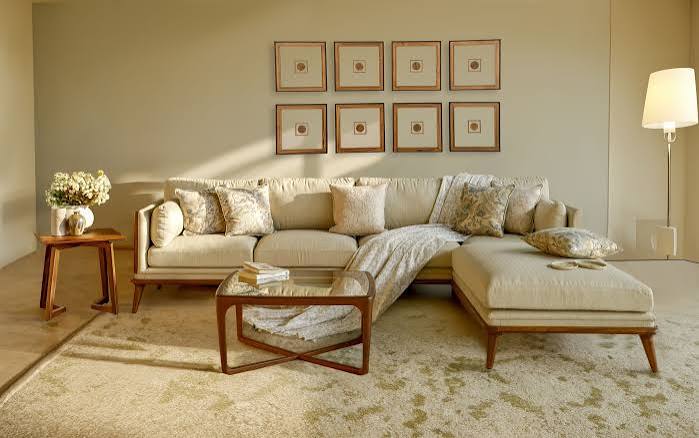
Use masking tape to outline the sofa and nearby tables on the floor. Open the room door, pull out a dining chair if it shares the space and walk the routes you use every day. For an L-shaped design, draw the chaise on the correct side as viewed from the room; confirm the seller’s left/right convention in a labelled sketch. Measure door openings, turns, stairs and lift access. A sofa fitting along the wall does not establish that it can reach that wall. See our sofa measurement guide for a separate access checklist.
Test comfort and ask what is inside
When a physical sample exists, sit in the positions you actually use and try standing up again. Try more than one seat. Check whether an arm or cushion forces an awkward posture. For a remote purchase, ask for a side-on measurement photograph and a clear explanation of seat support and cushion construction. A photograph cannot certify comfort.
Request a component description: frame material, joints, seat support, cushion filling, removable covers and the construction of any mechanism. A statement such as ‘wooden frame’ leaves important questions unanswered. Ask which components use solid timber, plywood or another panel and whether the sample and ordered build match. A heavy sofa is not, by itself, evidence of better joinery. Ask what can be repaired or replaced and obtain the actual warranty terms, if any, in writing.
Compare upholstery using the actual fabric
Request the fabric supplier or reference code, composition, colour sample and cleaning instructions. Compare the swatch in your room’s daylight and evening lighting. Ask whether photographs show the exact selected colour. Check seams, piping and pattern alignment on a real example where available. Households with children or pets should discuss their specific cleaning and snagging concerns rather than rely on an unexplained ‘family friendly’ label.
The Association for Contract Textiles cautions that laboratory abrasion numbers do not predict service life. Use test information alongside the intended application and care instructions; do not translate rub counts into a promised number of years. A stain-resistant claim also needs the supplier’s scope and maintenance conditions. Keep the approved swatch or its reference with the quotation.
Compare two quotations without guesswork
Build a like-for-like comparison with rows for dimensions, frame, seat support, filling, fabric reference, finish, configuration, transport, assembly, taxes and exclusions. Put ‘not confirmed’ in missing cells. This quickly exposes why two similarly styled sofas have different prices. It also gives the seller a clear list to answer.
For example, a proposal might include a three-seat sofa and a removable ottoman while another includes only the sofa. Treat the ottoman as a separate scope item instead of assuming one seller is cheaper. Agree the drawing, dimensions and upholstery before production begins. Record the change process, payment milestones, cancellation position and what happens if the completed item differs from the approved specification. Do not accept a delivery date merely because a design page exists.
Before approving the order
Confirm the seller, actual price, availability or made-to-order lead time, access assessment, delivery responsibility and returns terms. Ask who resolves damage reported at delivery and what evidence they require. Keep the order specification and selected media together so a later conversation is about the same item.
Browse sofas and sectionals for design discovery, then check the individual seller offer. Concept studies illustrate a possible design; they do not establish manufactured stock. For a bespoke brief, use furniture customisation enquiries with your room plan and requirements. A submitted enquiry starts a review; it is not a confirmed booking or purchase.
Sources and review notes
Technical references support the specific points identified above. They do not endorse TarteebHome or verify individual seller claims. Source photographs and technical drawings have not been reproduced.
- Association for Contract Textiles: Abrasion Disclaimer
- USDA Forest Products Laboratory, Wood Handbook, FPL–GTR–282
Editorial review: TarteebHome editorial desk. Sources checked 26 October 2026. Recheck product and supplier facts before any purchase.